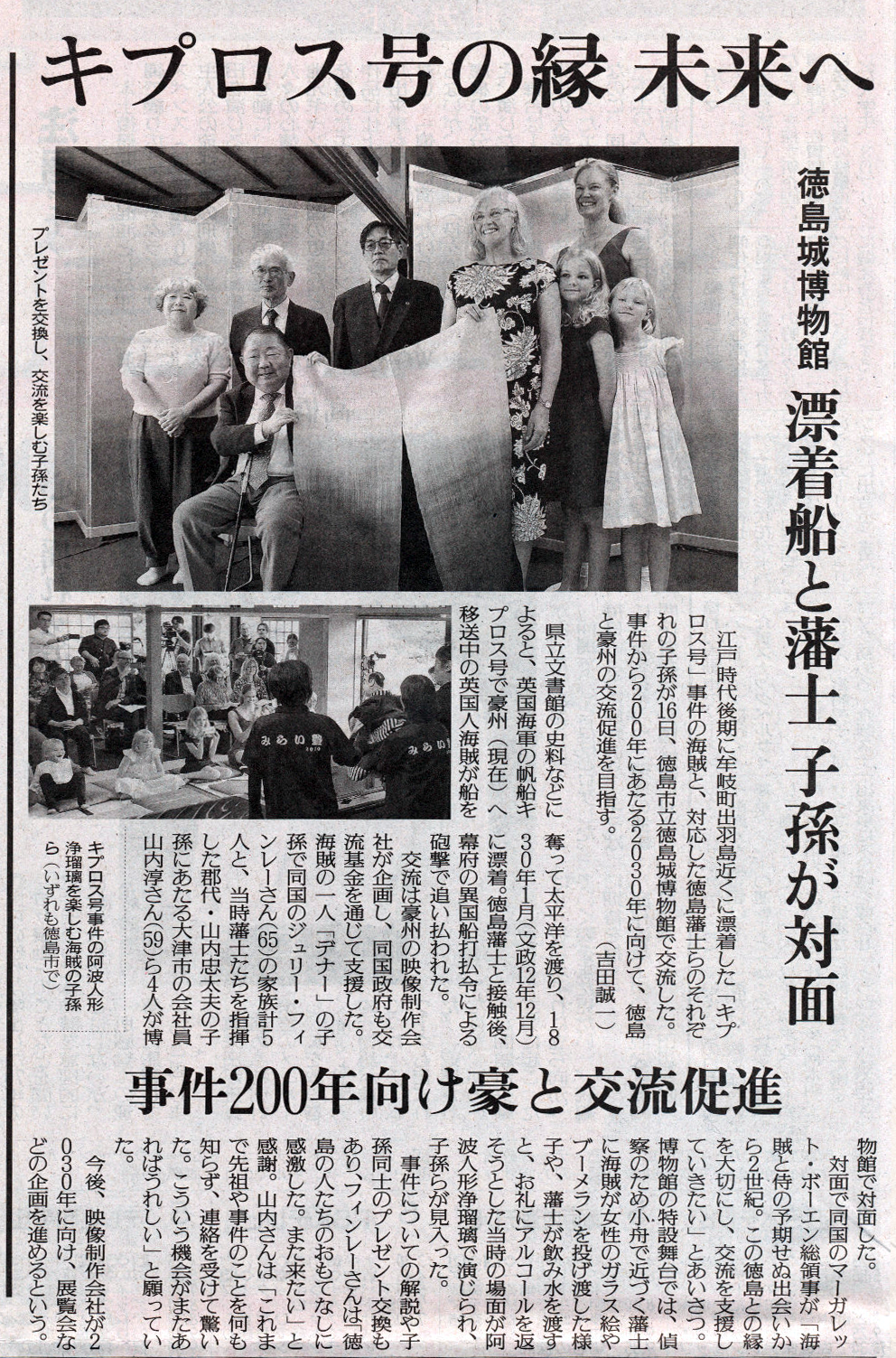
Descendants of Australian convict “pirates” and samurai involved in the Cyprus incident reunite after 195 years
With support from the Australia-Japan Foundation, on Thursday 16 October 2025, descendants of Australian convicts involved in the piracy of the Cyprus brig and samurai who encountered each other in January 1830, reunited in Tokushima Japan, to commemorate the meeting of their ancestors in what is now regarded as first contact between Australia and Japan.
An historic encounter
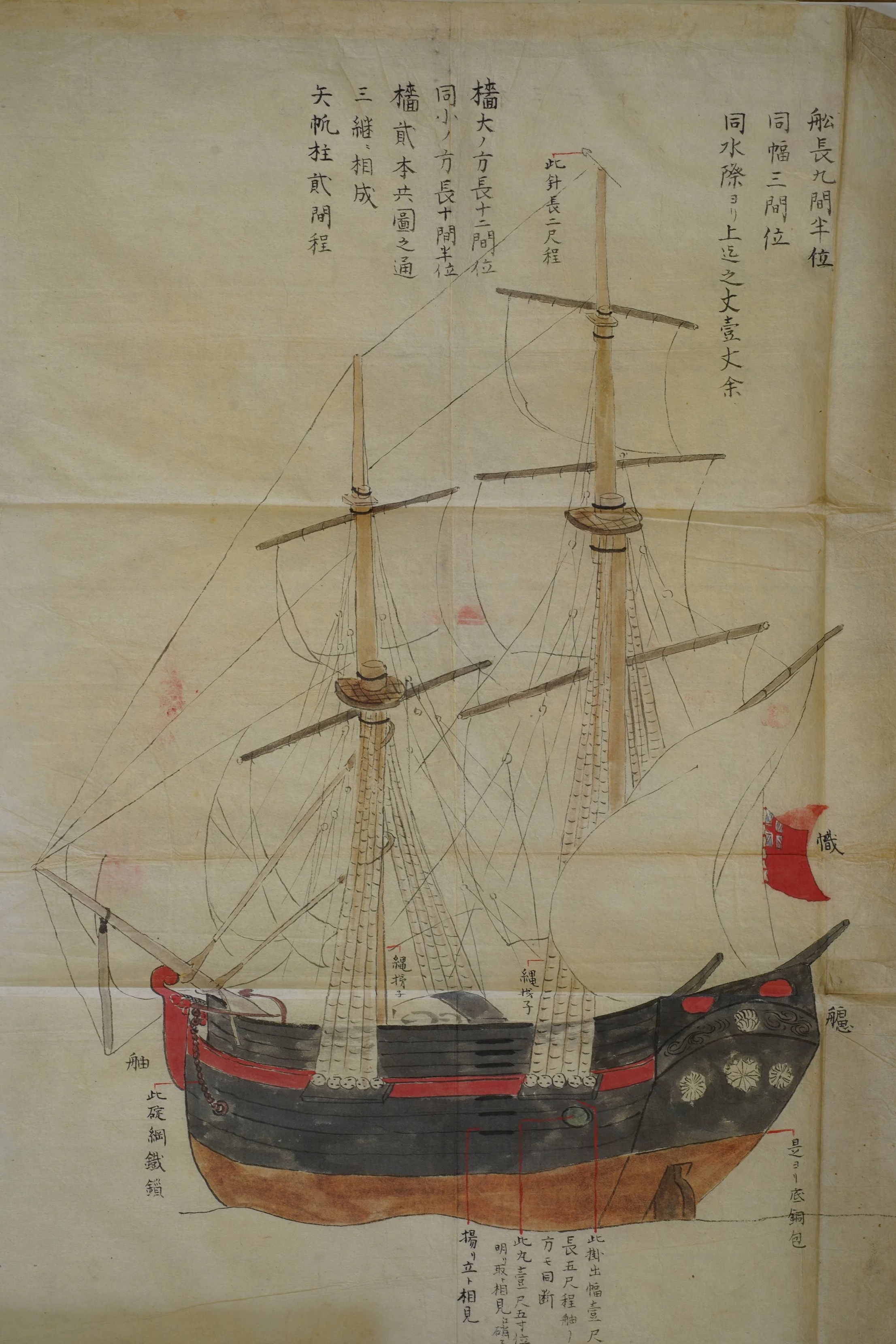
Twenty three years before Commodore Matthew Perry’s flotilla of black-bellied steam-powered ships arrived in Yokohama harbour. A solitary 60-foot, two-masted timber brigantine with a black-painted hull and crew of ten escaped convicts from the fledgling colony of Australia, arrived amongst a clutch of fishing vessels off the coast of Shikoku.
For the next 12 days the convict crew of the piratically seized colonial government transport the Cyprus brig from Van Diemen’s Land, present day Tasmania, would drift along the eastern seaboard of Shikoku, interacting with fisherman and samurai before eventually being forced back out to sea in a barrage of canon fire and musket shot in a highly orchestrated maritime repulse.
While Perry’s mission to Japan was motivated by a desire to open up the nation’s ports to American trading vessels, establish refuelling stations for Pacific crossings and to ensure the viability of the Japan Grounds whaling trade. The men aboard the Cyprus, with her sails "shred to pieces” from five months at sea, were driven to the Eastern coast of Japan in a desperate search of a safe harbour beyond the reach of the British Empire.
On the run from the authorities since they seized the very vessel that was transporting them to the penal settlement on Macquarie Harbour, the prisoners, either out of bold-faced confidence or sheer desperation, decided to try their luck in a country known to be hostile to foreigners since the Tokugawa Shogunate introduced mandatory isolation in 1635.
Although the convicts didn’t know it at the time, their infraction into Japanese territory and subsequent maritime repulse by samurai 12 days later, is now recognised as first official contact between Australia and Japan.
195 years later a very different reception
While 22-year-old Bristol-born John Denner, and his fellow convicts were prevented from landing by muskets fired the beachhead, 195 years later his descendants, Julie Findlay and her husband from Tasmania and their daughter Emily and her family from Canada, received an entirely different welcome.
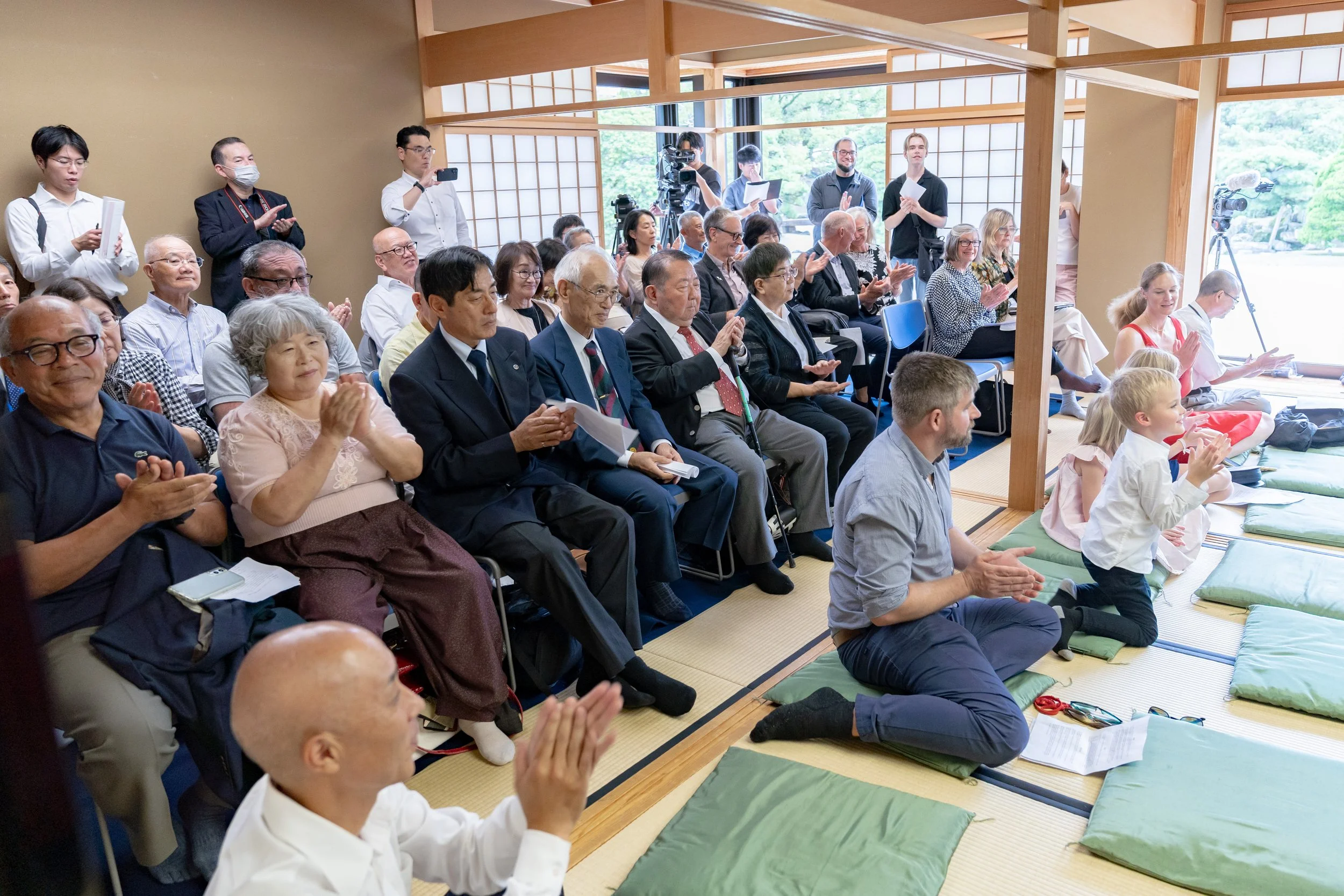
Gathered on the site of the former Tokushima Castle for a reunion event to recognise first contact between Australia and Japan that was presided over by Margaret Bowen Consul General, the Findlays along with descendants of the samurai their ancestor encountered, included Hiroyuki Hayami, Jun Yamanouchi, Chieko Yamamoto and Akio Mori.
Supported by the Australia-Japan Foundation, with additional contributions from Melbourne Maritime Heritage Network and Offshore Specialist Ships Australia and ongoing assistance from the Australian National Maritime Museum, the event is part of ongoing efforts to raise awareness of Australia’s longstanding history of cooperation with Japan and lay the groundwork for planned bicentenary activities to commemorate this historic encounter including a major exhibition in Australia.
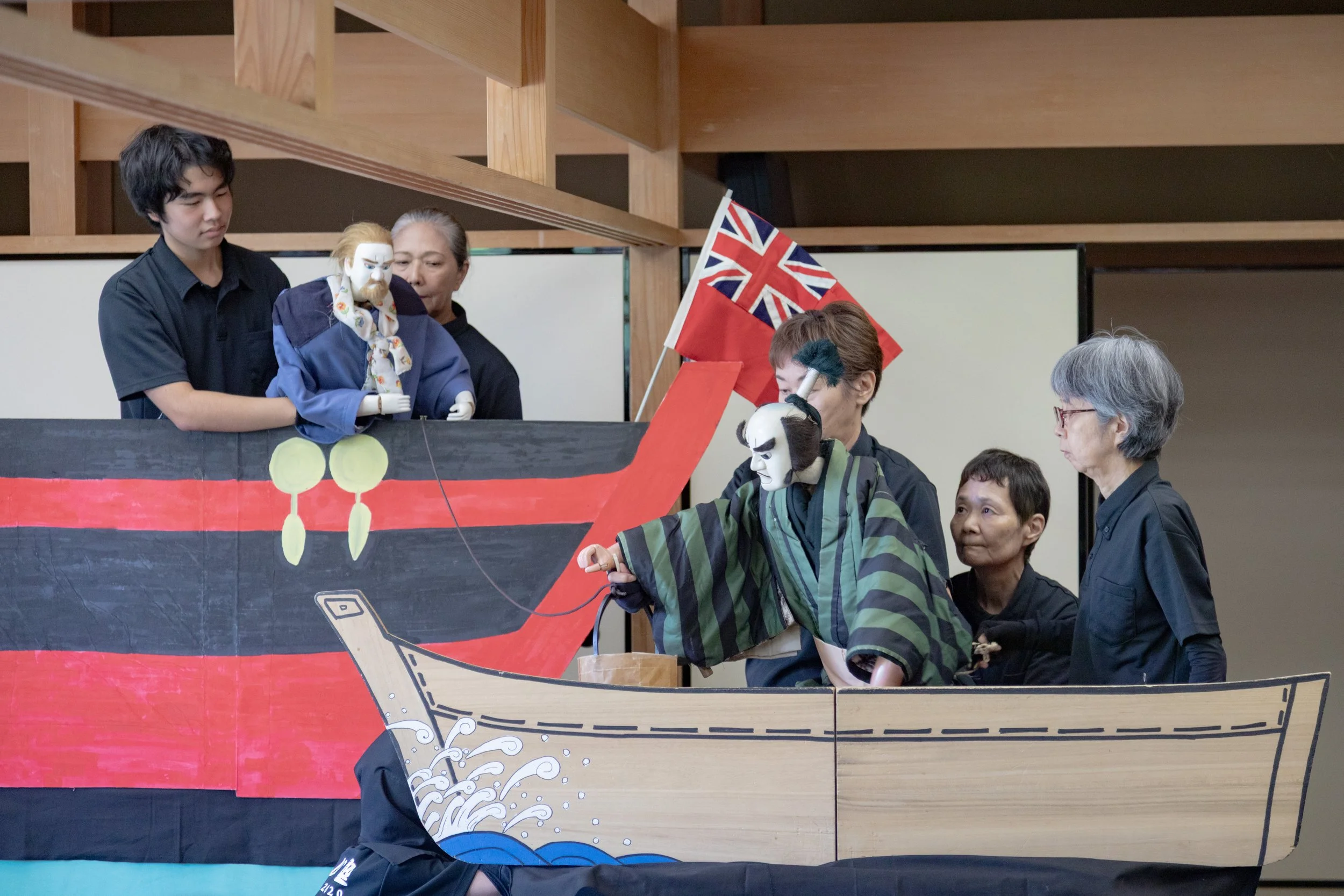
Samurai manuscripts brought to life
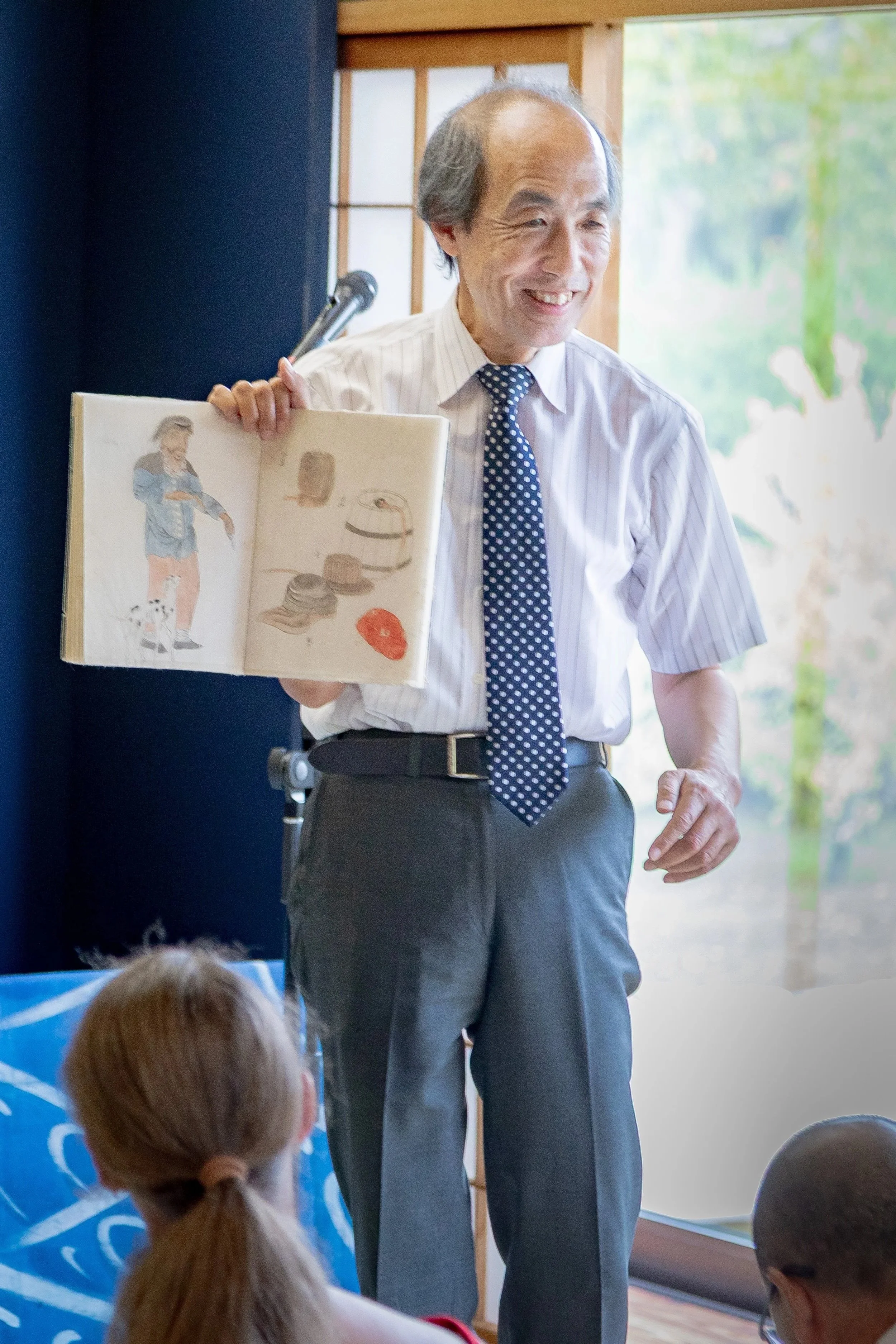
With orders from the Shogun to capture or kill all foreigners who stepped foot on Japanese soil and to record all interactions with the utmost detail, several samurai kept meticulous records of what transpired. As part of the event three such interactions were brought to life using ningyou joruri, a perfornance involving traditional Japanese wooden dolls accompanied by a shamisen playing narraor, in a performance staged by the nationally recognised, Tokushima-based Awa Jurobe Yashiki puppet theatre and developed in collaboration with Aya Hatano and Timothy Stone from Gatherer Media.
In one of the staged encounters, local samurai Sawaro, who has rowed out to the Cyprus with wood and water for the convicts, is noticeably perplexed by a curved wooden object that is thrown down to him in thanks. As the puppet taps the curved shape rhythmically on his wooden skull, his mouth opens wide and the audience laughs. Today everyone in the room knows it's a boomerang, but 195 years ago when the samurai chronicler Kanzaemon Hirota who accompanied Sawaro out to the Cyprus, was so lost for words to describe the strange object that was offered as a gift he recorded as a pictograph in his manuscript.
In another exchange based on records from the day of the samurai repulse. The convicts offered greeted cups a small group of samurai that had rowed out to the Cyprus dressed as fishermen with cup filled with alcohol. Unable to partake in the friendly gesture, the samurai watched on as the Australians shared the drinks amongst themselves, observing how the alcoholic drink appeared to give the “great pleasure”.
.
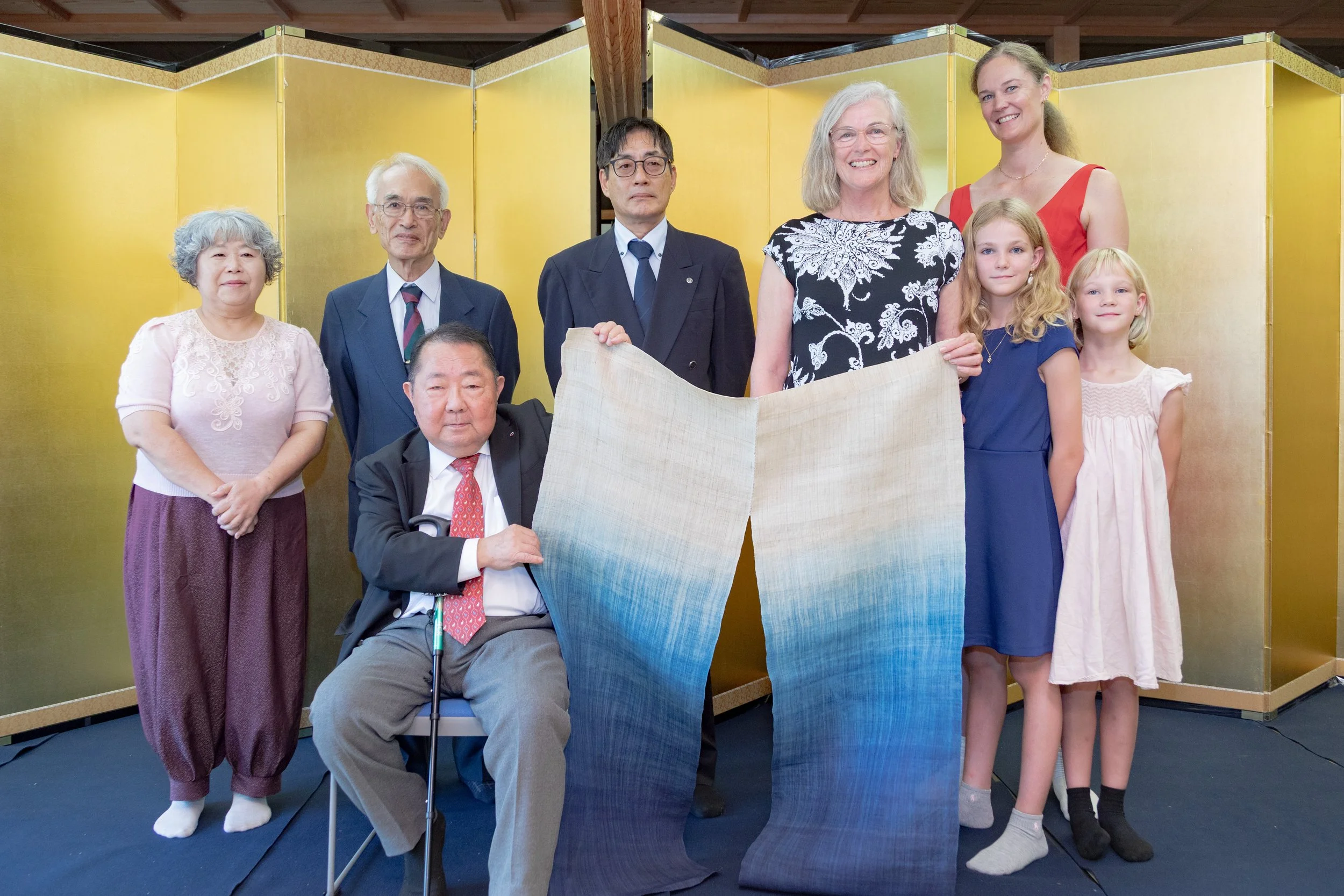
Symbolic exchange
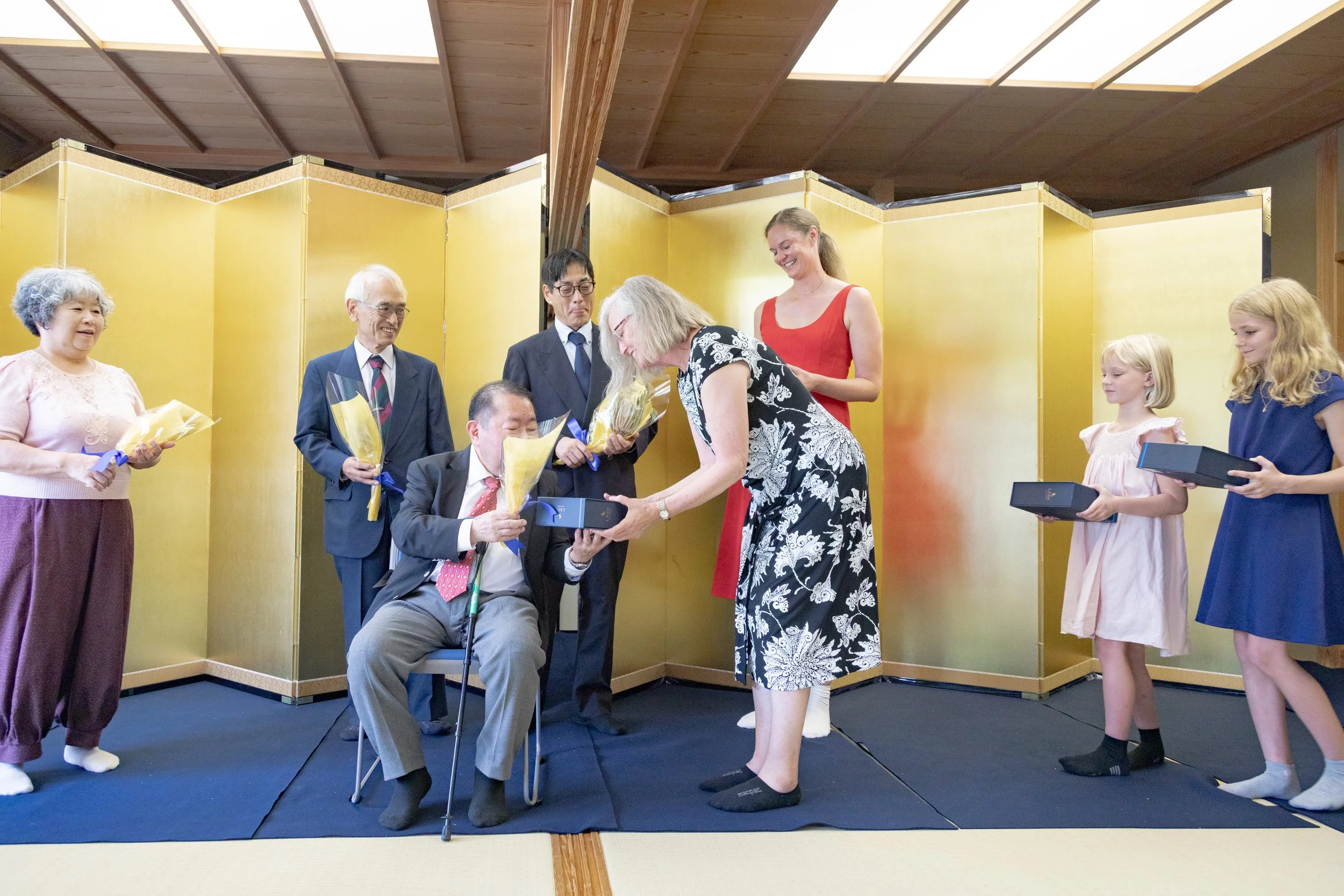
The official Pirates and Samurai reception concluded with a symbolic exchange inspired by the manuscripts, with the descendants of Awa Domain samurai jointly presenting the Julie Findlay and her family with an Indigo dyed Japanese Noren, or room divider, a traditional craft of Tokushima that featured an Indigo gradient design reminiscent of the Japan sea and chosen to represent the waters where Australia and Japan first met. While Julie Findlay and her family presented yellow Waratah flowers, which in the Eora language of the First Peoples of Sydney means to be ‘seen from a distance’ which represents new beginnings, along with Tasmanian Lark whisky, representing the drink the convicts wished to share with the samurai but circumstances would not allow.
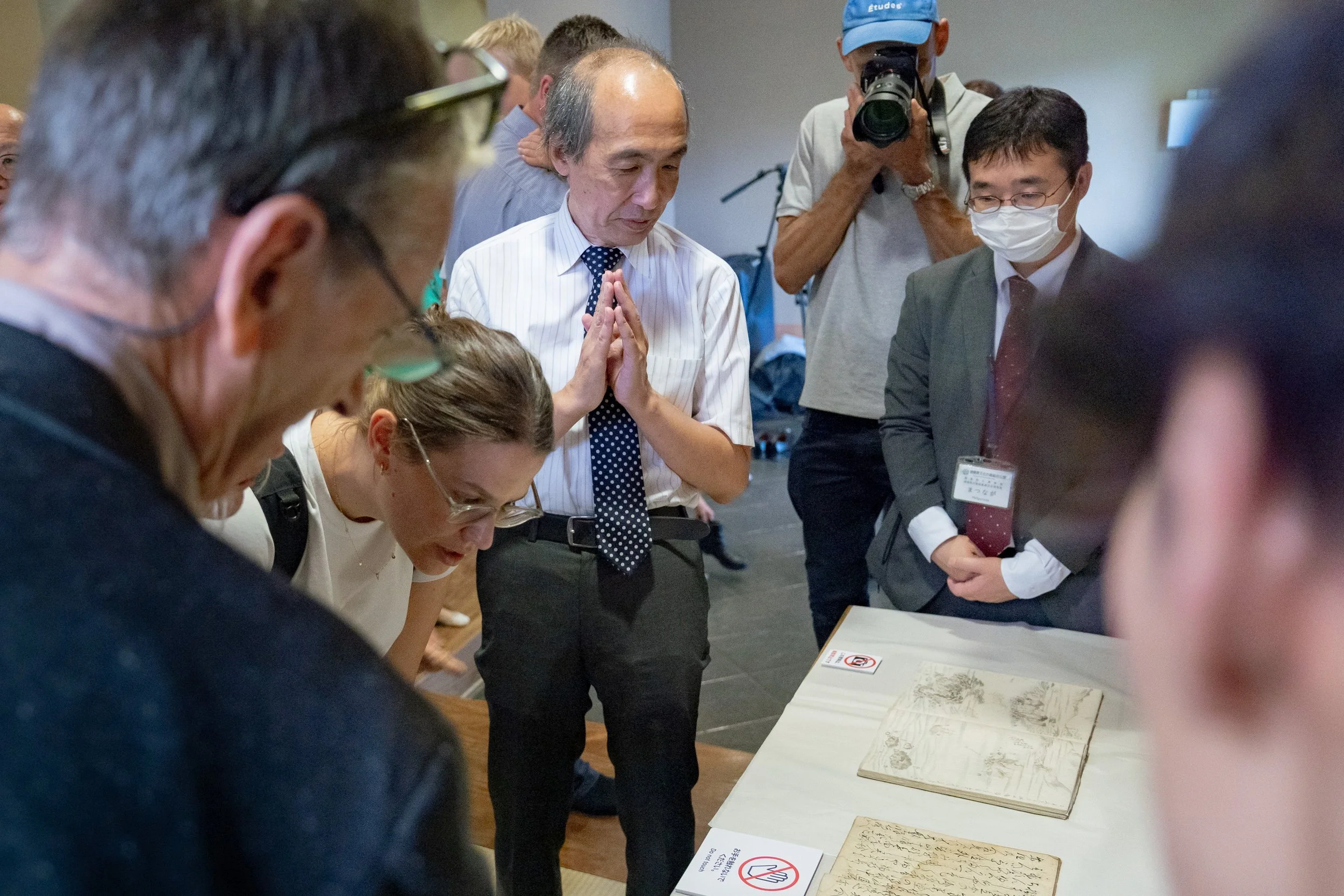
Following the conclusion of official proceedings, guests were invited to view a display of five manuscripts brought together for possibly the first time in recorded history, on loan from the Tokushima Prefectural Archives, Tokushima Prefectural Museum and two private lenders.
The reception event garnered significant media coverage both in Japan and Australia, a selection of that coverage is included below.
Japanese coverage:
Nikkei
Kyodo(共同通信) article syndicated nationally to over 50 mastheads including Tokyo Shinbun , Kobe newspaper, Okinawa Times, Shizuoka newspaper , Nishinihon Newspaper, Sanyo News, Saitama newspaper and many more...
Yomiuri Tokushima
Shikoku TV
NHK News
NHK World
Tokushima Shinbun
Australian coverage:
How a bunch of AustraliNHKan convicts became the most wanted men in the world, October 19 2025, Sydney Morning Herald,
Rare manuscripts throw light on the story of a little-known mutiny, October 22 2025, The Australian
Reunion of samurai and convict Cyprus brig descendants, October 25 2025, ABC Hobart
How teacher's Google search finally solved a 180 year old Australian mystery, October 23 2025, Sydney Morning Herald
Yomiuri Shimbun: Tokushima News